

Flashcards? Aren’t those kind of… old school?
That’s exactly what I hear from time to time and honestly, I get it. In a world of interactive apps and digital tools, a stack of paper cards might feel outdated.


But here’s the thing: just because something’s been around for a while doesn’t mean it’s lost its power.
In fact, I’d argue flashcards are one of the most underrated tools we can teach our students to use. They aren’t just a study tool, they’re a study skill. One of those habits that sets students up for success far beyond high school.
It reminds me of that quote:
“Give a man a fish, and you feed him for a day. Teach a man to fish, and you feed him for a lifetime.”
That’s how I see flashcards. Not just about feeding them facts but giving them a way to own their learning.
🔍 What Are Flashcards (And What Makes Them Work)?
At their core, flashcards are double-sided cards used for self-quizzing. One side has the term and the other has the key info (definition, diagram, examples, etc.). But the power isn’t in the format, it’s in how they’re used.
Flashcards promote:
🟧 Active recall (pulling information from memory instead of just rereading)
🟧 Spaced repetition (reviewing the right info at the right time)
🟧 Self-regulation (students decide what to study and when)
There’s plenty of research backing this up:
📚 Karpicke & Roediger (2008) found that active recall significantly improves long-term retention.
📚Ebbinghaus’ forgetting curve shows that repeated review over time helps beat forgetting.
And best of all? They’re simple, low-prep, and student-driven! Everything I love in a classroom strategy.
🔍 Why I Still Use Flashcards in My Anatomy Unit
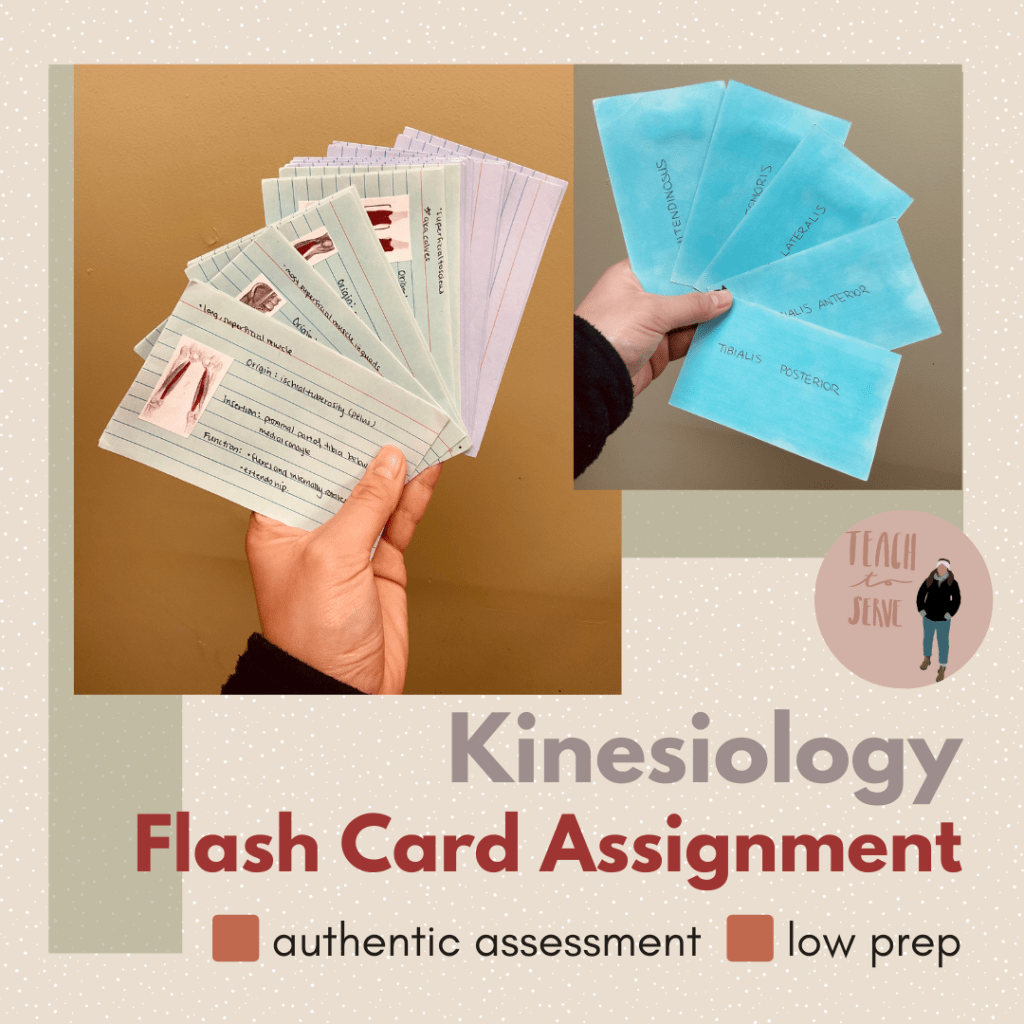
I introduce flashcards right at the start of our anatomy unit in PSK4U.
It’s not just a one-off task. It becomes a core part of how we learn, review, and even assess content.
Here’s why I love them in this unit:
- They reinforce proper anatomical terminology like origin, insertion, and muscle function.
- They push students to prioritize key information, not just copy everything down.
- They build study skills that transfer directly to college or university courses, especially for students heading into kinesiology, health science, or nursing.
🔍 How I Use Flashcards as an Assessment & Engagement Tool
Here’s where flashcards shine, they aren’t just for independent review. I use them throughout the unit in all kinds of ways:
✅ As a formative assessment
Quick check-ins where I can see what students are retaining and what needs reteaching.
✅ As an in-class activity
Flashcard speed rounds, partner quizzes, or small group challenges. It gets them talking and thinking together.
✅ As a study tool
They’re perfect for reinforcing content ahead of a unit test or final evaluation.
✅ As an application-based assessment aid
Toward the end of the unit, I give students a critical thinking assessment and here’s the twist:
I actually allow them to bring their flashcards. The questions are not simple recall. Instead, they’re designed to push students to critically apply their knowledge.
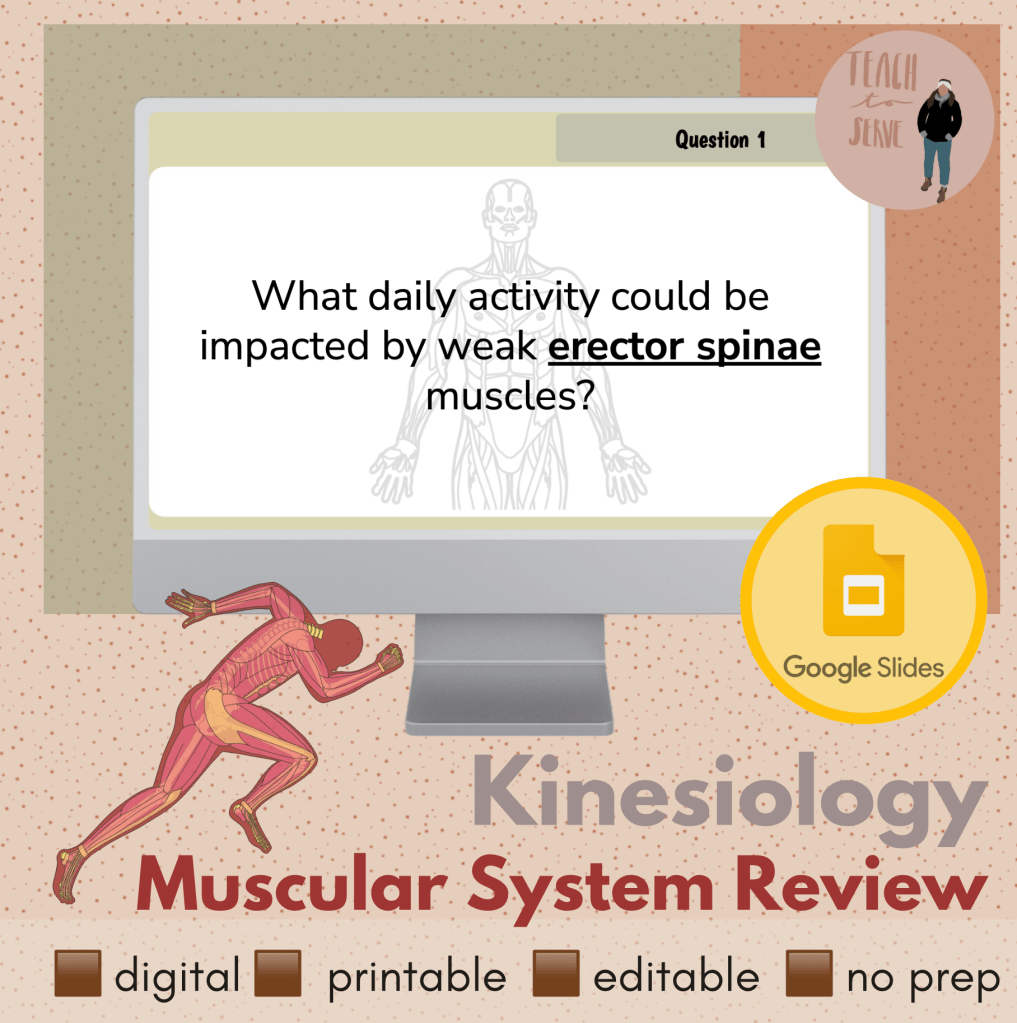
🔍 12 Ways to Use Flashcards in Biology & anatomy Class

Flashcards don’t have to be boring or repetitive.
Here are 12 ways I’ve used them (and that students have actually enjoyed!):
- Label-the-Diagram Pair Match: Match terms to blank diagrams (great for muscles!)
- Stations with Different Decks: Rotate through muscles, bones, joints, etc.
- Self-Check Board: Students sort cards into “got it” and “need to study” piles
- Peer Quizzes: Students quiz each other in pairs.
- Flashcard Relay: Teams race to answer questions correctly.
- Memory Match: Matching terms with definitions.
- Hot Seat: One student answers rapid-fire questions.
- Gallery Walk: Display flashcards around the room for students to explore.
- Flashcard Bingo: Create bingo cards with terms; call out definitions.
- Charades: Act out terms for others to guess.
- Jeopardy Game: Use flashcards to create a quiz show format.
- Exit Tickets: Students answer a flashcard question before leaving class.
🔍 Final thoughts…
Final verdict: Flashcards are incredibly low-prep for teachers and super high-impact for student learning.
Flashcards are a timeless tool that, when used effectively, can enhance learning and engagement in the classroom. They empower students to take control of their learning and develop study habits that will benefit them beyond the classroom.
If you’re looking for a low-prep, high-impact way to support your students in anatomy or really any science unit, flashcards are a great place to start.
🎯 Want to save time? My Anatomy Flashcard Assignment is fully aligned to PSK4U and includes everything from instructions to rubric so your students can start strong, and stay engaged.
If you teach PSK4U Kinesiology…
Get My Free pacing unit guide!

 Teach to Serve
Leave a comment