
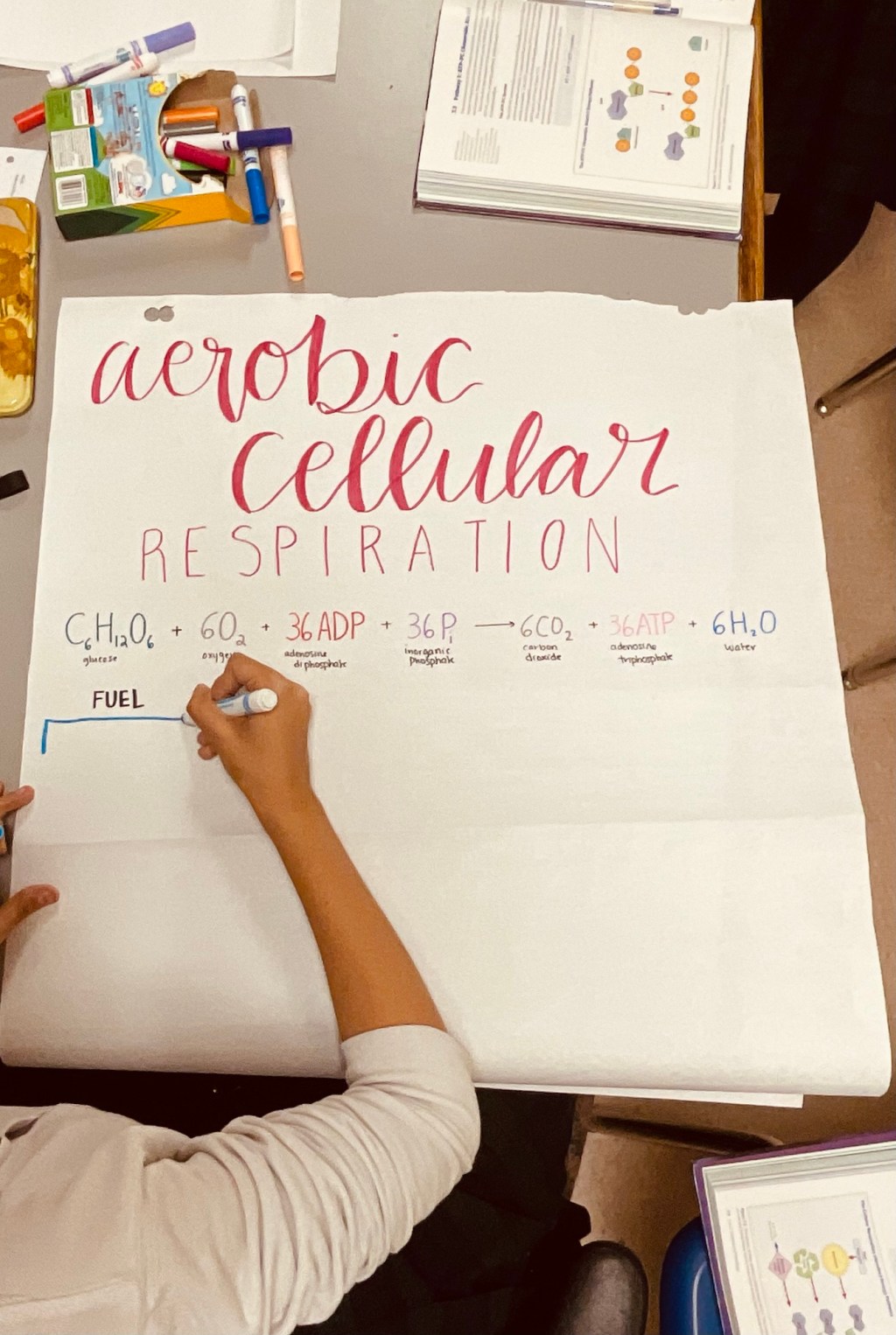
Greetings high school biology educators!
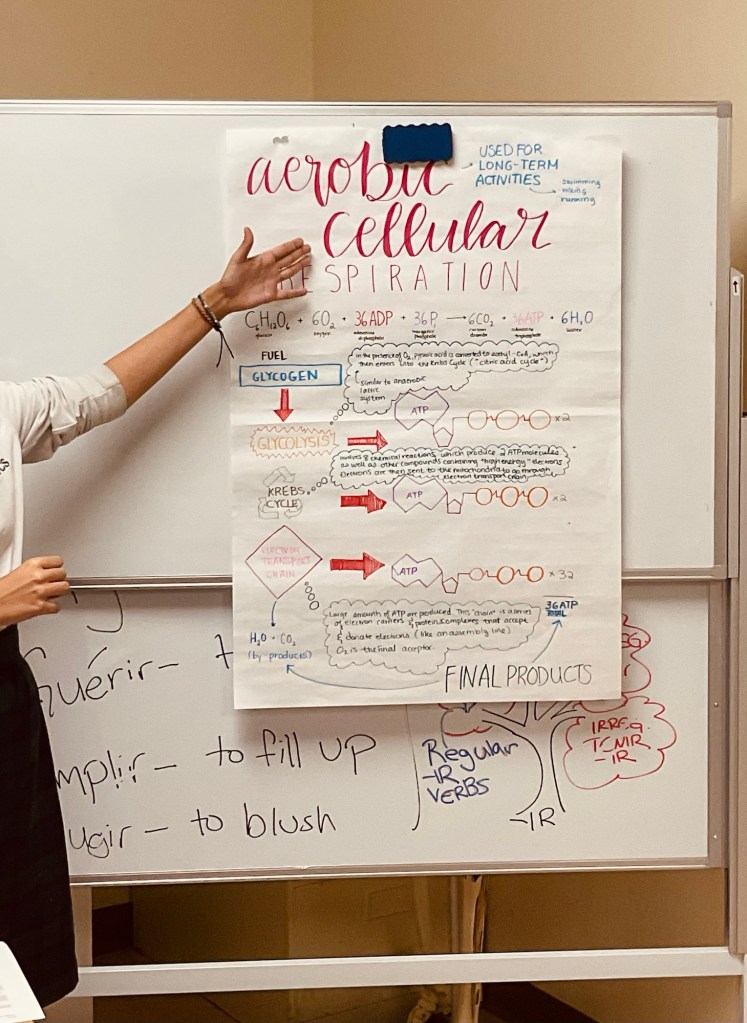
Ever found yourself in need of a class activity that’s both meaningful and requires minimal prep time? Well, buckle up because we’ve got a game-changer for you – the Anchor Chart! In this blog post, I am going to share how I used to teaching strategy to cover the three energy pathways in our Metabolism Unit.
Here’s how you can turn a couple of days into a powerhouse of collaborative learning. (No pun intended, I guess they were learning how ATPs are made in the mitochondria in the cell!)
What’s an Anchor Chart?
Let’s start with the basics. An anchor chart is not just a pretty classroom decoration; it’s an instructional tool designed to help students visualize and summarize key information on a specific topic. Think of it as your secret weapon for condensing complex concepts into a student-friendly format.
Implantation in Two Days:
Day 1️⃣: Assign Topics
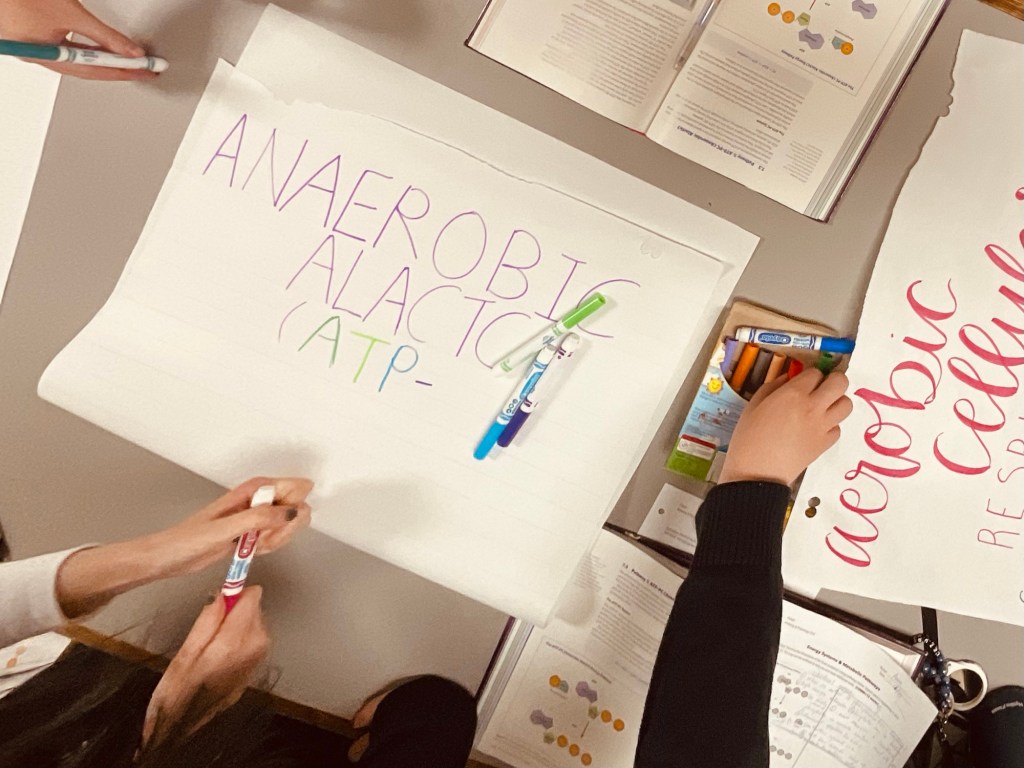
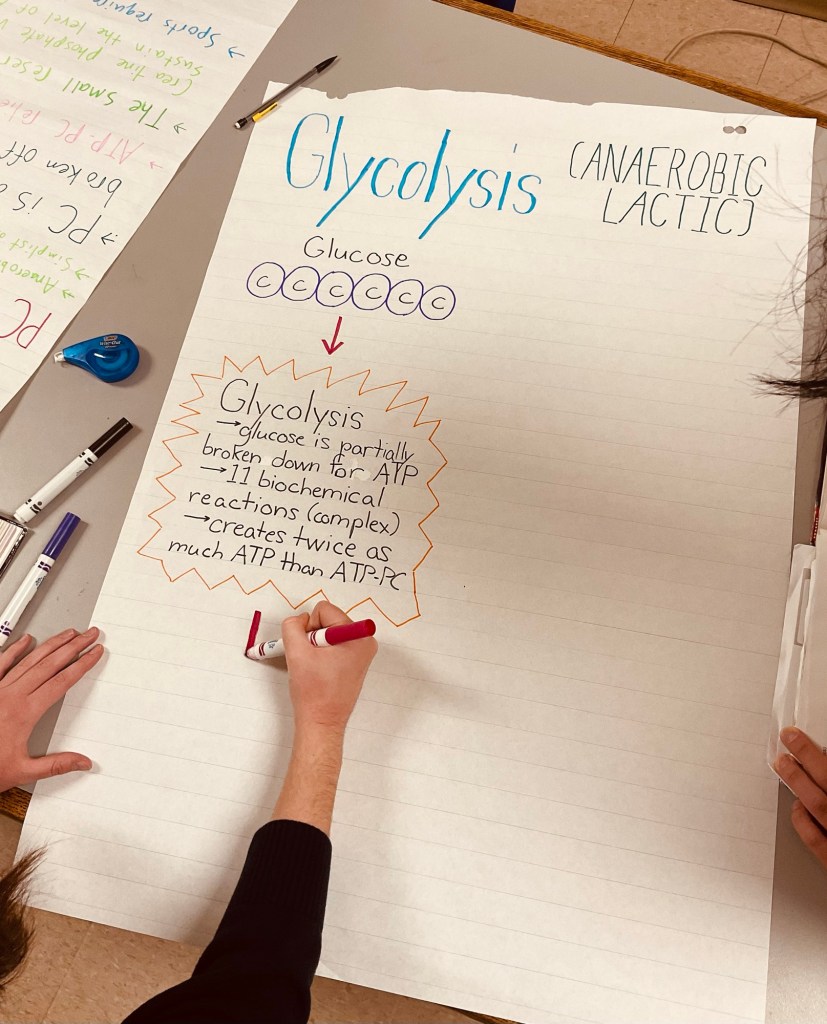
- Assign different topics to student groups. Let them dive into the material and, more importantly, encourage collaboration. It’s a team effort!
- Witness the creation and collaboration as small groups work their magic. Each group will craft their own anchor chart, condensing the essentials of their assigned topic.

Day 2️⃣: Present, Teach, and Take Notes
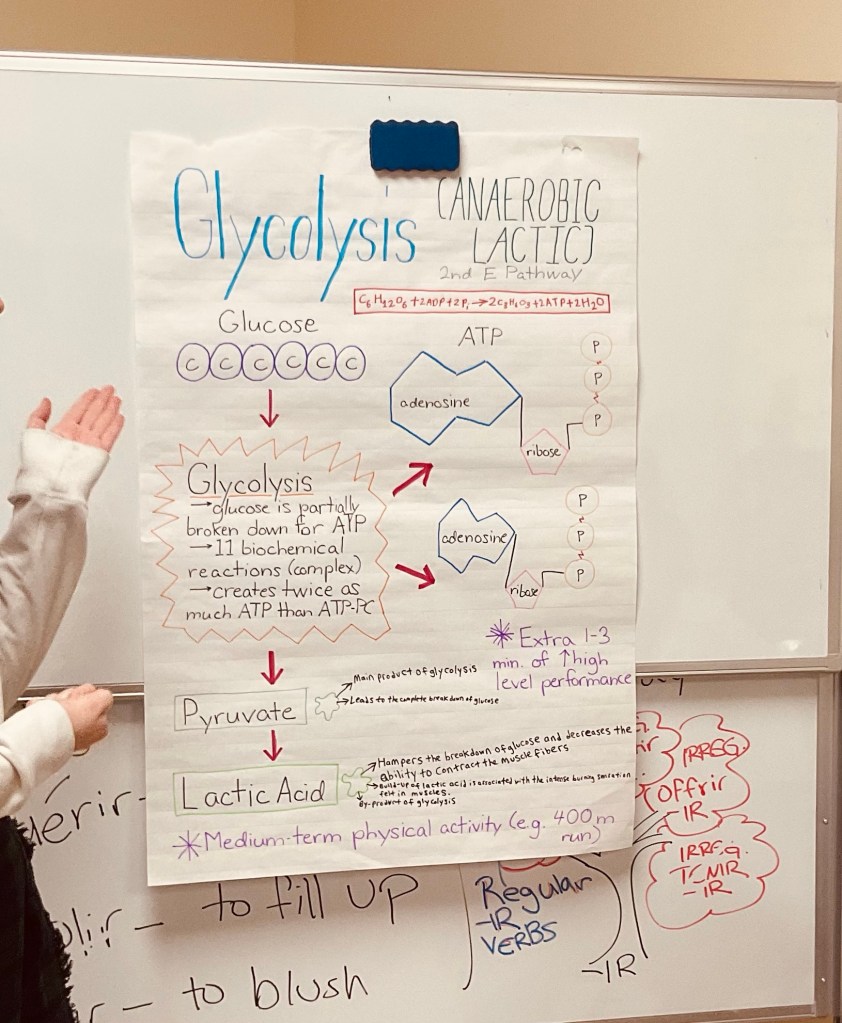
- The moment arrives! Each group presents their anchor chart to the class, effectively teaching their chosen topic. It’s not just a presentation; it’s a knowledge exchange.
- Students take notes from each other, fostering a peer-to-peer learning environment. It’s a win-win situation – presenting boosts confidence, and note-taking enhances comprehension.
Benefits of Using Anchor Charts in High School Classrooms:
Why Anchor Chart? Isn’t that way too elementary? Here’s some perks:
👉🏽 Foster Collaboration & Creativity: Watch students thrive in a collaborative setting, brainstorming ideas, and bringing creativity to life on those charts.
👉🏽 Promote Self-Efficacy: Presenting in front of peers boosts confidence and self-efficacy, essential skills beyond the classroom.
👉🏽 Assess Communication Skills: It’s not just about the content; assess students’ ability to communicate complex ideas effectively.
👉🏽 A Reference Point Throughout the Unit: Stick those anchor charts on the wall, and voila! You’ve got an ongoing reference point for the entire unit.
In the whirlwind of teaching, give Anchor Chart a try to experience effortless engagement. Your students will thank you, and you’ll thank yourself.
Don’t Forget to…
🔔 Save this for later: Bookmark this page for those busy days.
🔔 Share this with a teacher in a time crunch: Spread the knowledge and make someone’s day!
🔔 Join my Email List for More Teaching Ideas: Subscribe for more engaging teaching strategies straight to your inbox.


 Teach to Serve
Leave a reply to Mrs. T Cancel reply