

Let’s be real—most high school students don’t actually know how to research.
They Google the first thing they see…
They copy random information…
And they throw together a research paper that’s basically a summary dump…

Then, when they get to university or college, they have no. idea. how to find reliable sources, analyze information, or write academically. (This may or may not be my personal experience.)
Even if you teach research skills perfectly, your students will still struggle.
But there’s one thing that can change that (we’ll get to that later 😉).
First, let’s break down the THREE biggest struggles students face when it comes to research—and what we can do to fix them.
Struggle #1: Students Don’t Know Where to Find or Evaluate Reliable Sources
📌 The Problem:
- Most students have no idea where to start when it comes to research.
- They either Google random articles, rely on Wikipedia (don’t even get me started), or struggle to navigate databases for scholarly sources.
- Even if they find sources, they don’t know how to evaluate credibility—leading them to use outdated, biased, or unreliable information.
✅ Solution:
- Teach source evaluation: Give students a simple checklist for assessing credibility (peer-reviewed? recent? biased?).
- Show them where to look: Introduce Google Scholar, PubMed, university databases, and other trusted sources.
- Scaffold the research process: Have students justify why they chose each source before using it.
💡 Want a structured way to teach source evaluation? My Symposium Project helps students research, analyze, and present their findings like real experts!

Struggle #2: Students Think Research is Boring and Irrelevant
📌 The Problem:
- If students don’t see the real-world application, they’ll mentally check out and rush through their research.
- They see research as just another assignment, rather than a skill they’ll actually use in their future careers.
- Without engagement, their work becomes surface-level instead of deep and thoughtful.
✅ Solution:
• Make research personal: Let students choose topics they actually care about (sports science, AI, medical ethics, etc.).
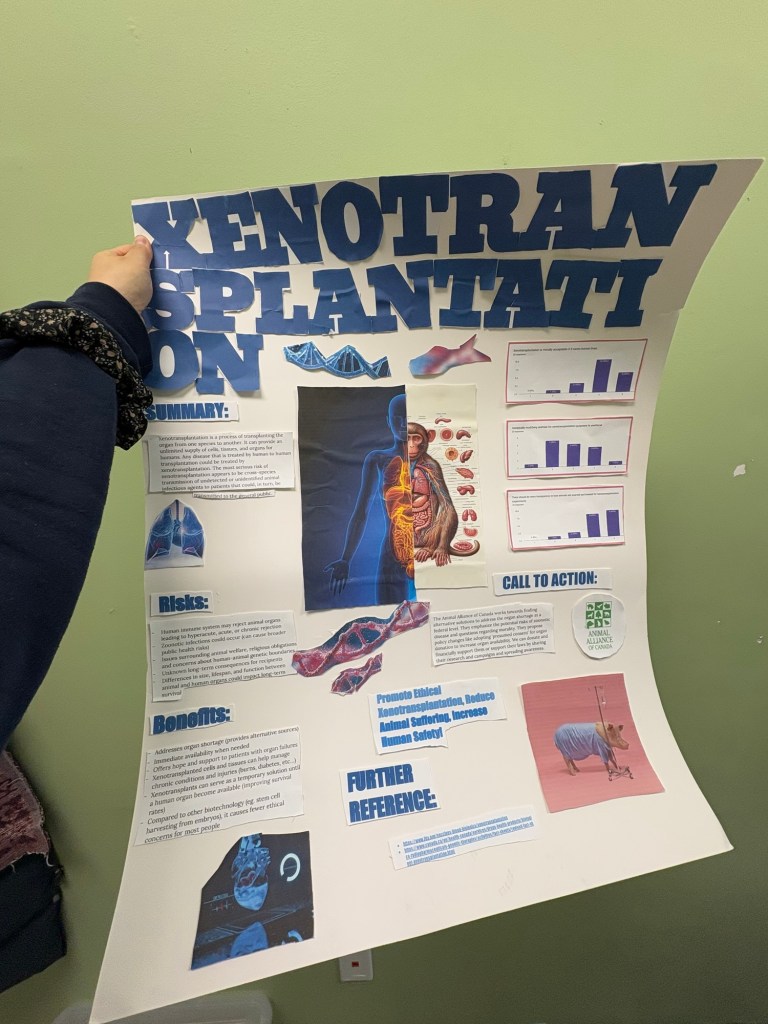
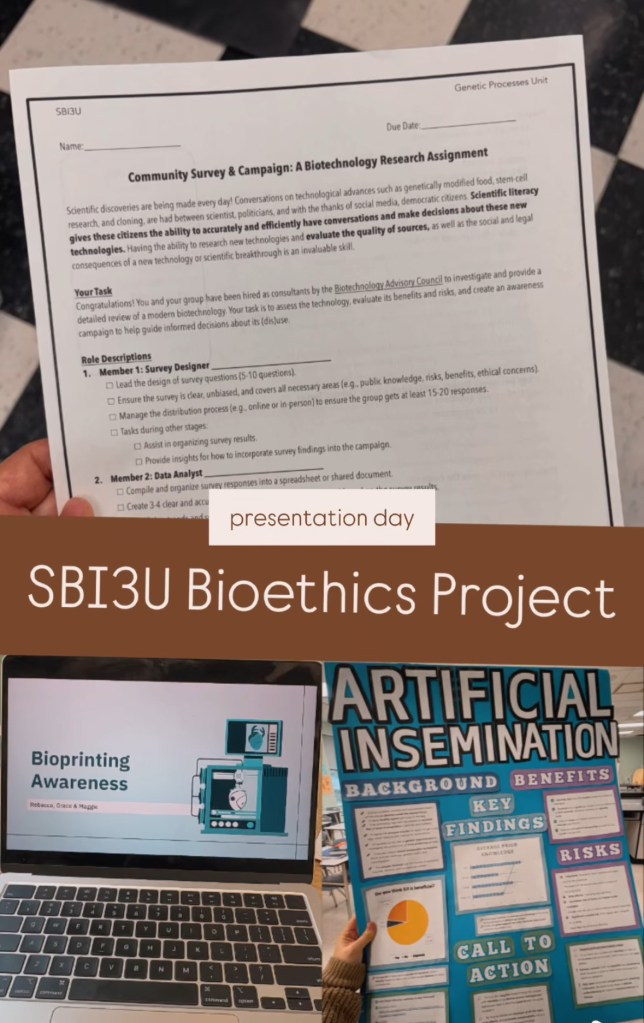
• Use interactive formats: A Bioethics Research Project helps students think critically about real-world scientific dilemmas.
• Showcase real-world impact: Connect research to careers in medicine, forensics, business, or law to show students why it matters.
💡 Want to make research feel meaningful? My Bioethics Research Project challenges students to explore and debate real-world ethical dilemmas!

Struggle #3: Students Lack Critical Thinking, Data Analysis, and Academic Writing Skills
📌 The Problem:
- Even after students find good sources, they don’t know how to analyze the information or structure a strong argument.
- Their research papers lack depth—they summarize instead of critically engaging with the material.
- Academic writing feels overwhelming—they struggle with paraphrasing, synthesizing sources, and forming logical conclusions.
✅ solution:
- Teach structured research writing: Break it down into steps (thesis, evidence, counterarguments, conclusion).
- Incorporate peer review: Let students critique each other’s research before submission.
- Make research interactive: Instead of a standard essay, try a symposium-style debate or expert panel presentation.
💡 Want students to analyze and present research effectively? My Symposium Project helps them engage with research like professionals!
The One Thing That Changes Everything…
No matter how well you teach research, students will struggle—until they realize that research isn’t just about gathering facts.
It’s about thinking critically, forming arguments, and applying knowledge in meaningful ways.
That’s why I love research-based projects that go beyond essays (I mean who really wants to read and mark all 30 essays!?) —they engage students, make learning interactive, and teach skills they’ll actually use beyond high school.
Which one do you resonate with the most?
🔔 Comment below – I would love to hear your thoughts!
🔔 Share it with a fellow teacher who’s looking for research-based teaching strategies.
🔔 Subscribe for more classroom strategies that make research engaging, relevant, and student-centered!
 Teach to Serve
Leave a comment