

Hello fellow biology teachers! Today, I’m excited to share an engaging classroom activity that not only helps students learn about trees but also nurtures their critical thinking skills. So, grab your notebook and let’s dive into the world of DIY dichotomous keys!
Background
A dichotomous key is like a secret code that unravels the mysteries of classification. The term “dichotomous” hints at presenting two choices at each step, guiding us toward the right identification.
Our students’ challenge was to craft their very own dichotomous key, using the characteristics they’d observed. They began with broad questions like, “Is the leaf elongated or round?” and systematically narrowed down their options with each query until they could confidently name each leaf.
Objective
To learn classifying tree leaves based on their unique characteristics and creating a dichotomous key.
Setup
Lay out various tree leaves around the classroom with its name (common name and scientific name).


“Wins” I noticed from this activity:

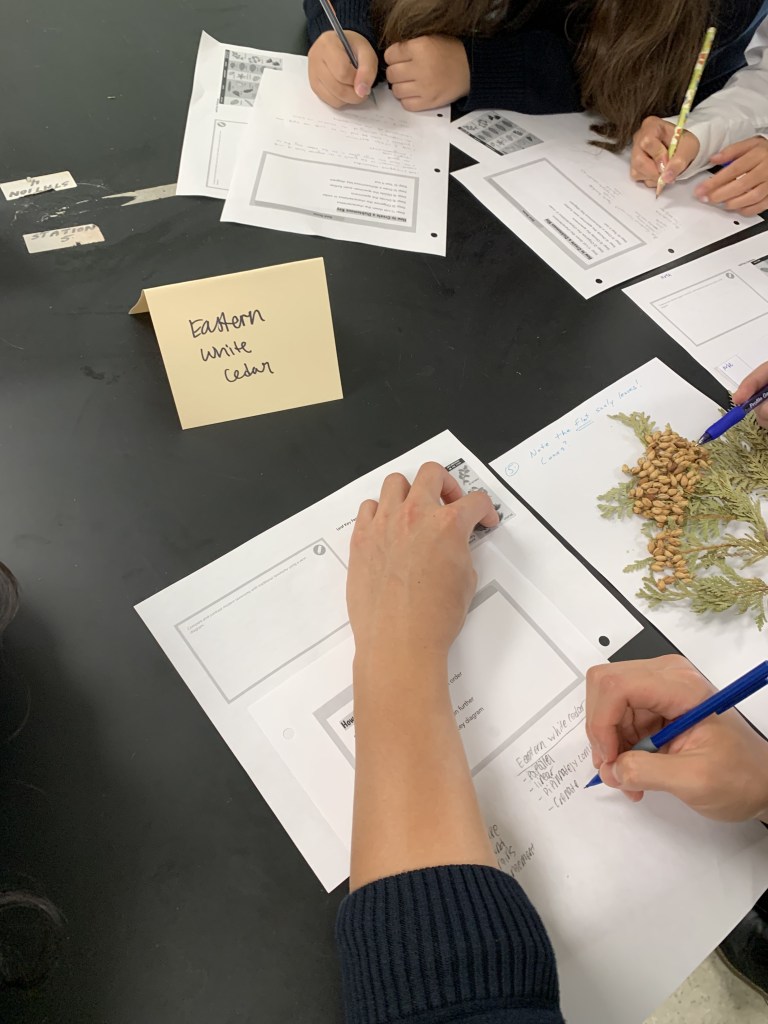
- Teamwork and Shared Wisdom
One of the most heartwarming aspects of this activity was the teamwork it fostered among our students. They shared their observations, engaged in lively discussions, and supported each other on this quest for knowledge.
As educators, we know that teamwork doesn’t just enhance learning; it equips students with the problem-solving and collaboration skills they’ll need in the real world.
- The “Aha!” Moments
As our students neared the finish line with their dichotomous keys, the classroom was alive with those “Aha!” moments. They’d not only created a leaf-identifying tool but had also unlocked the enchantment of the natural world.
The real magic happened when they used their keys to identify leaves they’d never encountered before. It was like piecing together a botanical puzzle, and those moments of revelation were pure gold.
Final thoughts…
Incorporating DIY dichotomous keys revealed the power of hands-on, inquiry-based learning. It showcased our students’ potential to become sharp critical thinkers and collaborators.
So, fellow biology educators, if you’re on the lookout for a classroom adventure that nurtures observation skills, critical thinking, and teamwork, consider embarking on your leafy escapade.
Let’s keep inspiring each other and nurturing that spark of curiosity in our students. Here’s to the joy of teaching, the marvels of nature, and the boundless potential of our brilliant learners! 🌿🌳📚
 Teach to Serve
Leave a comment